

The story
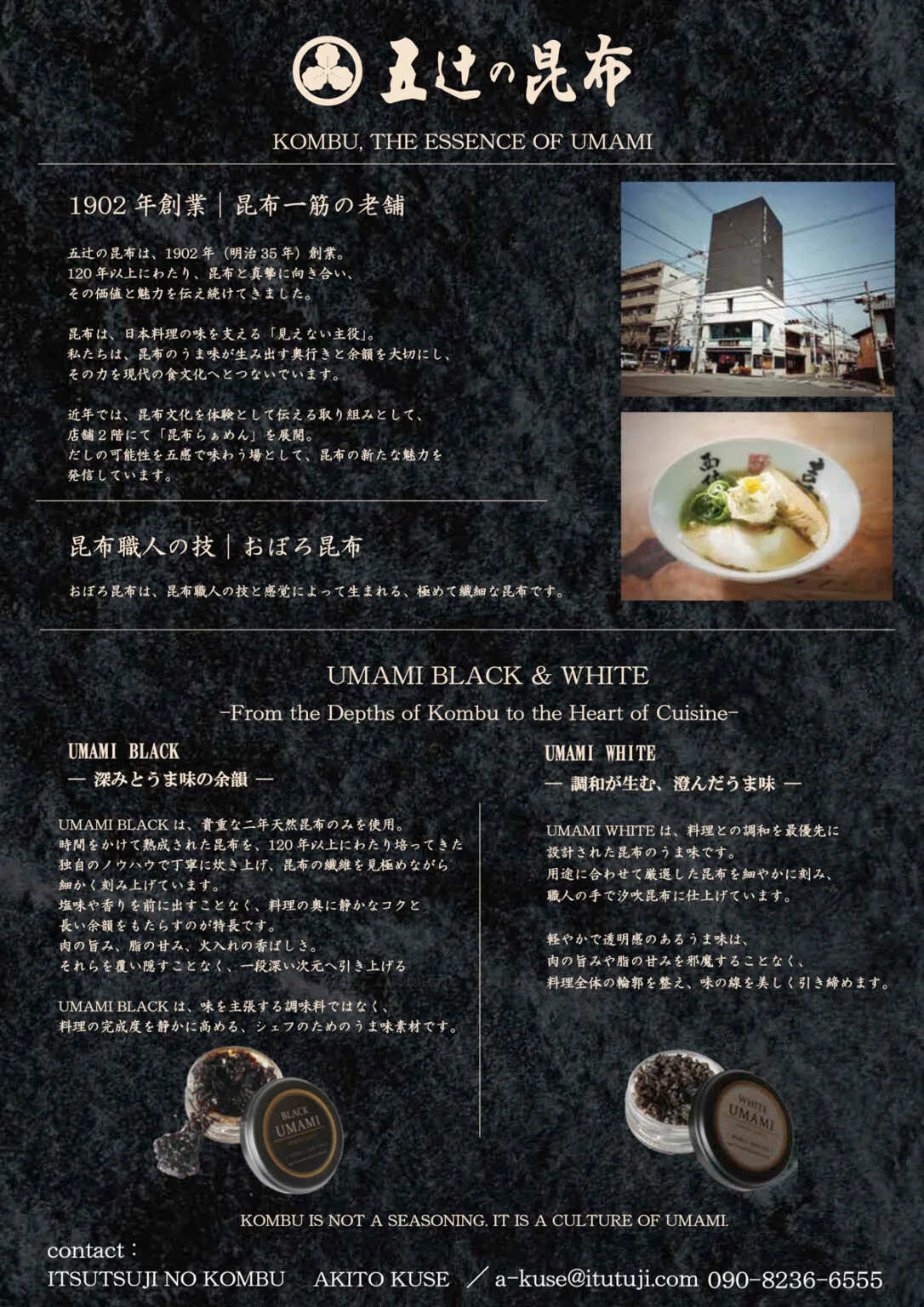
Kombu to Men Kiichi sits on the second floor of Itsutsuji no Konbu, a Kyoto institution founded in 1902. The family behind the shop watched kombu disappear from everyday kitchens – chronic poor harvests, changing habits, rising costs. Their response was not a nostalgic retreat but something new: a ramen bowl built entirely around kelp. No meat, no kaeshi, no additives. Just clear, layered umami.
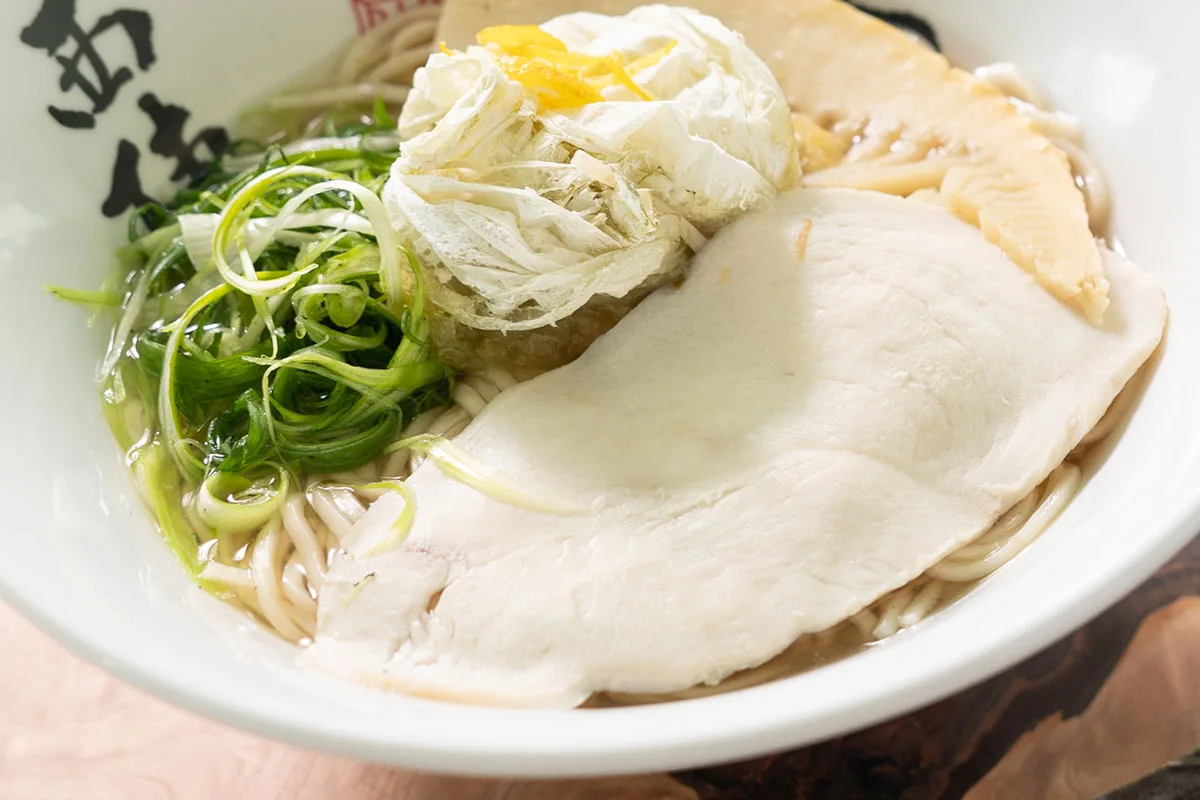
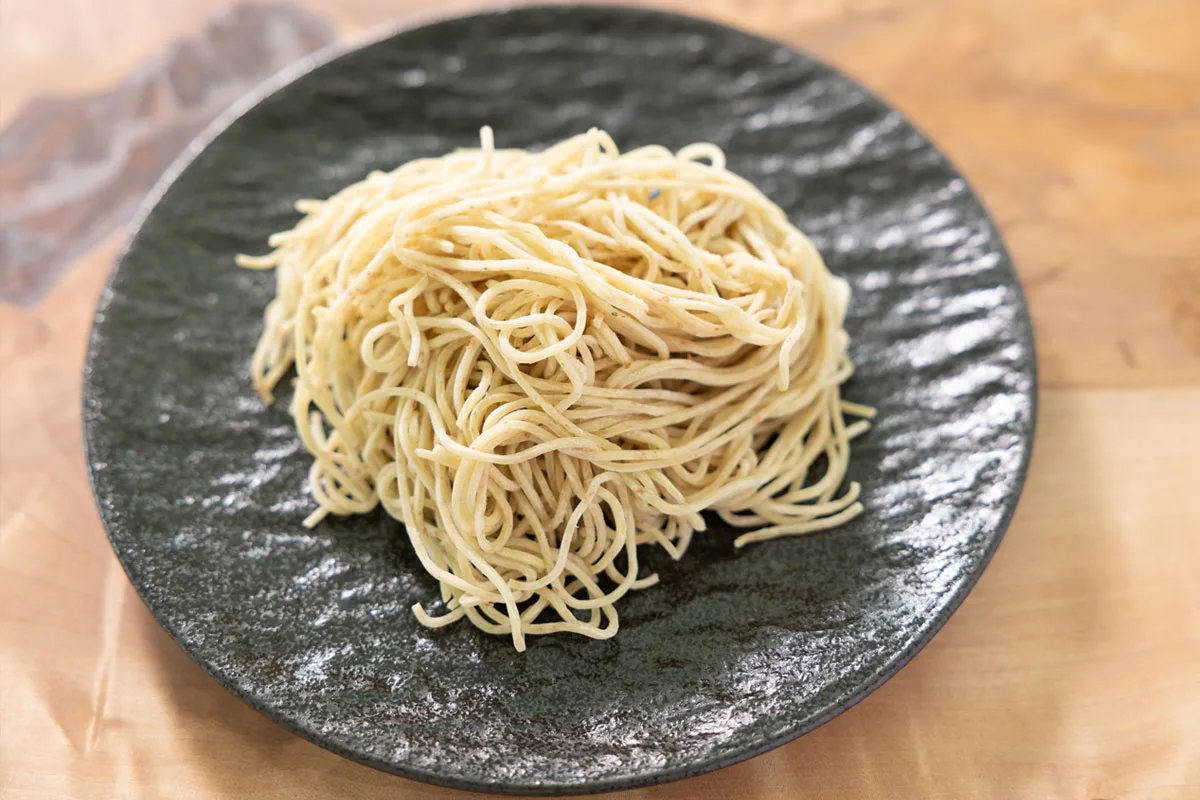
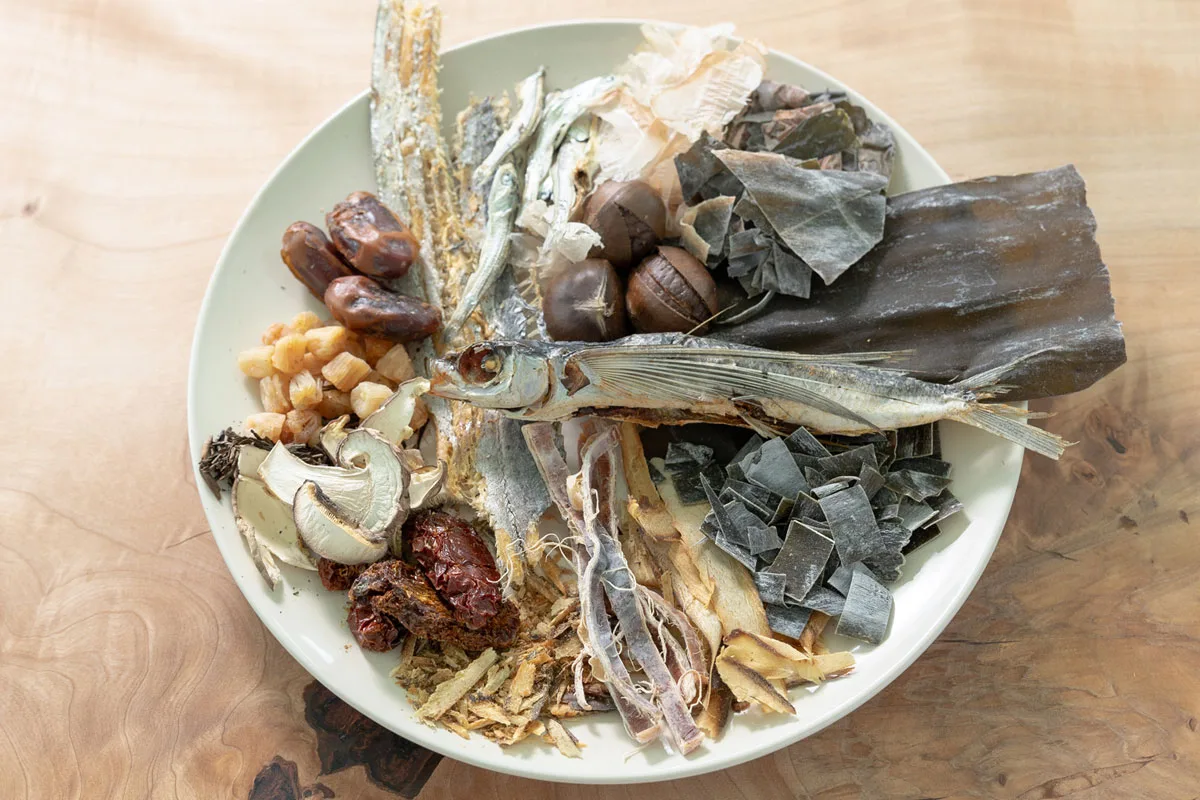
The soup starts with water run through a reverse-osmosis system to reach zero hardness. Three kombu varieties – ma, rishiri, and rausu – are blended, then cold-brewed with dried fish, shaved katsuobushi from Makurazaki, dried squid, shellfish, nuts, and tea leaves. Salt adjustment is the only seasoning. The noodles, made specially by a local ramen shop, use Hokkaido spring wheat flour Haruyokoi as the base, with whole wheat added.
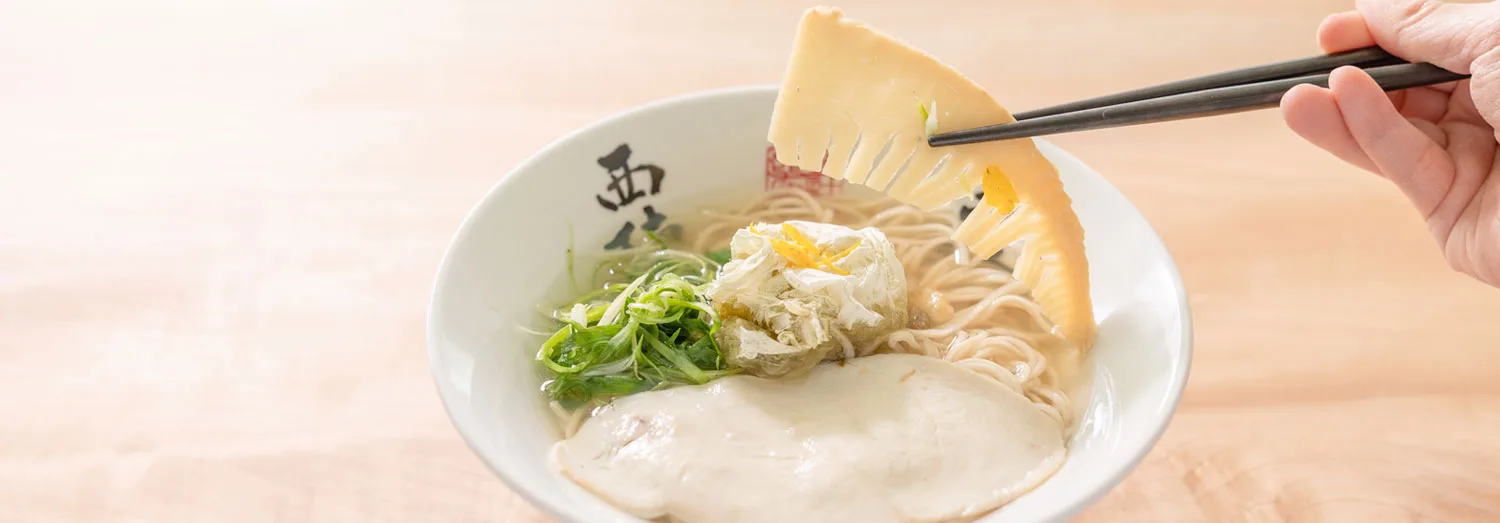
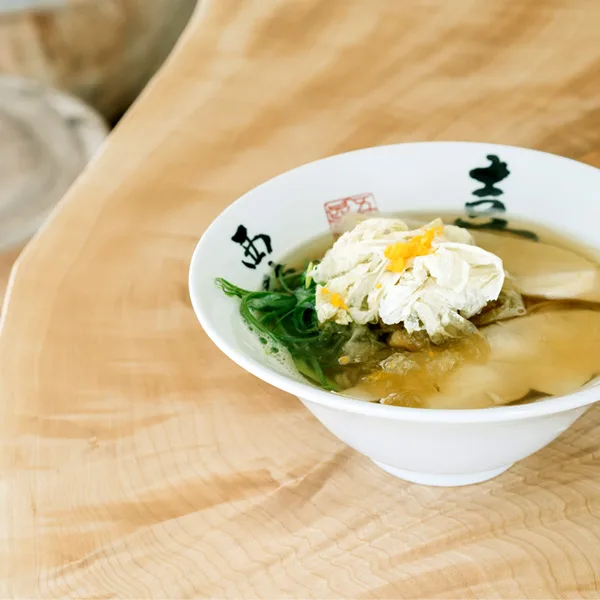
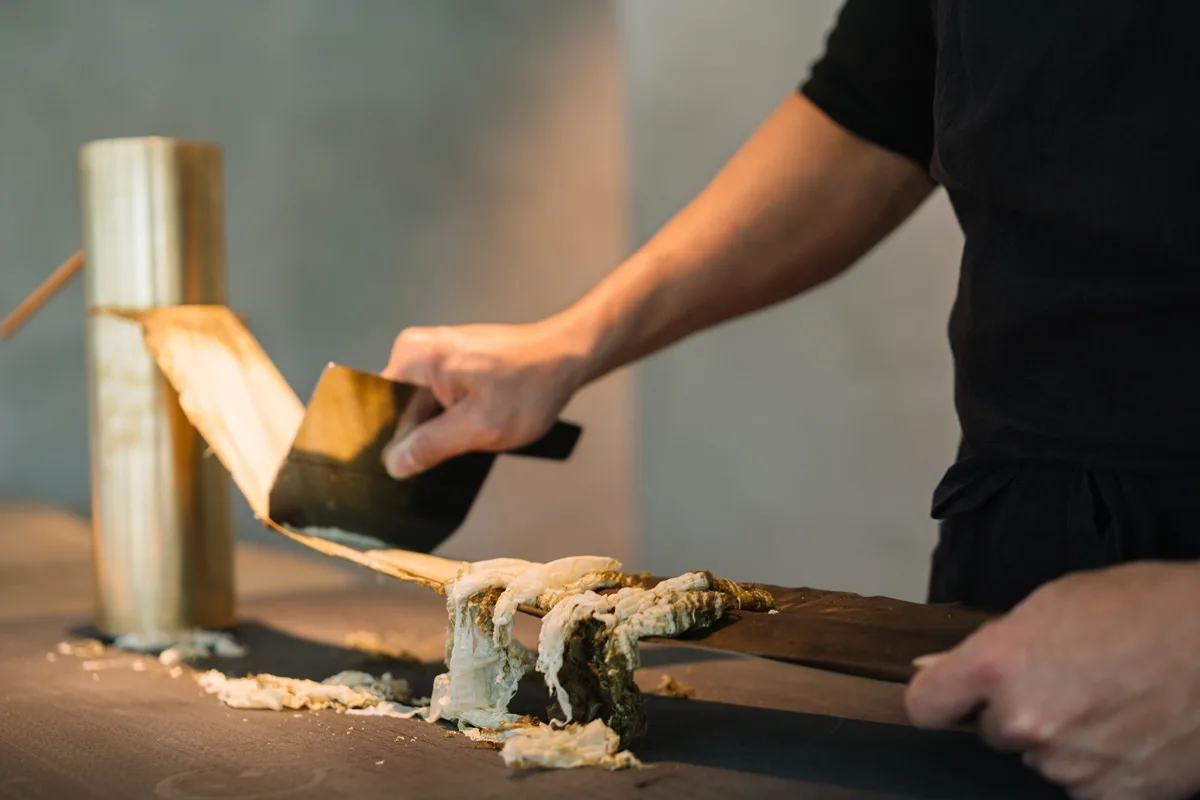
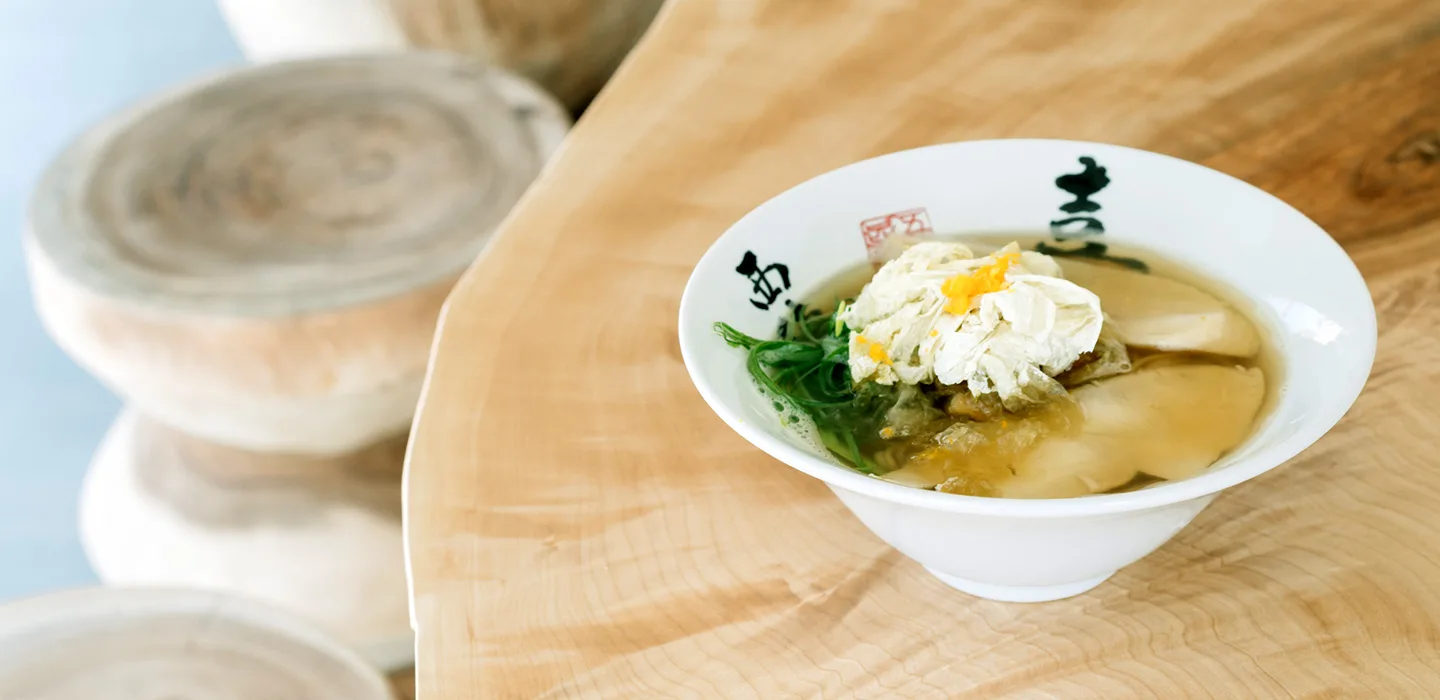
Chicken breast is slowly cooked in broth and salt. Bamboo shoots are simmered in dashi and lightly seasoned. On top sits hand-shaved oboro kombu – thin, almost translucent shreds of ma kombu that melt into the broth.
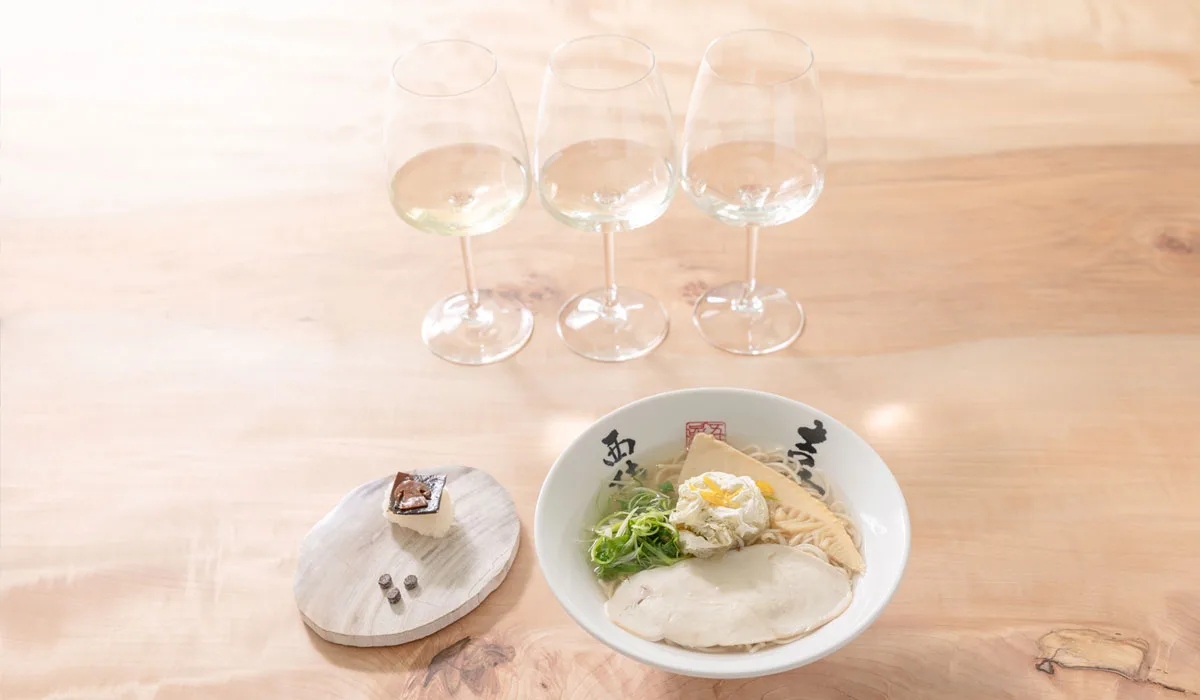
A meal at Kiichi is served in three courses, each designed to deepen your understanding of kombu.
First, three wine glasses arrive with cold-brewed water from ma, rishiri, and rausu kombu. You taste the differences in aroma, colour, and flavour.
Second comes the ramen itself. The hand-shaved oboro kombu is added at the table, a small ceremony that changes the bowl.
Finally, a mini onigiri is served with Itsutsuji’s own kombu tsukudani – a salty-sweet simmered kelp relish that has been made in the same shop for over a century.
The restaurant operates a "one kombu" policy: in addition to the ramen (priced 1,520 yen, a playful pun on "ee kombu"), guests purchase at least one item from Itsutsuji’s kombu shop. It is a small gesture to keep kelp in daily life.
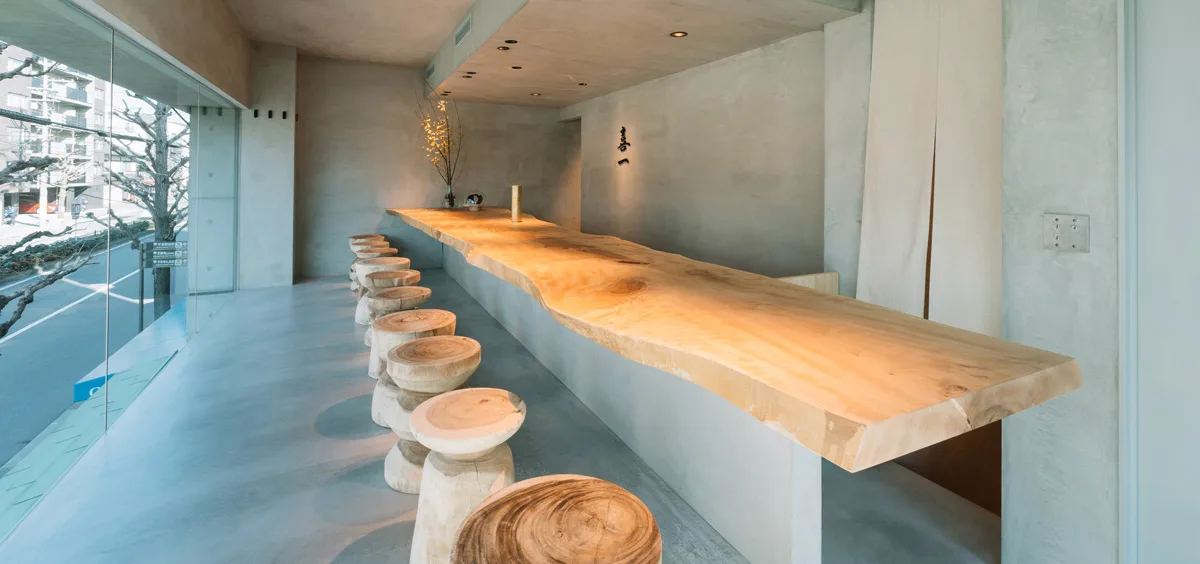
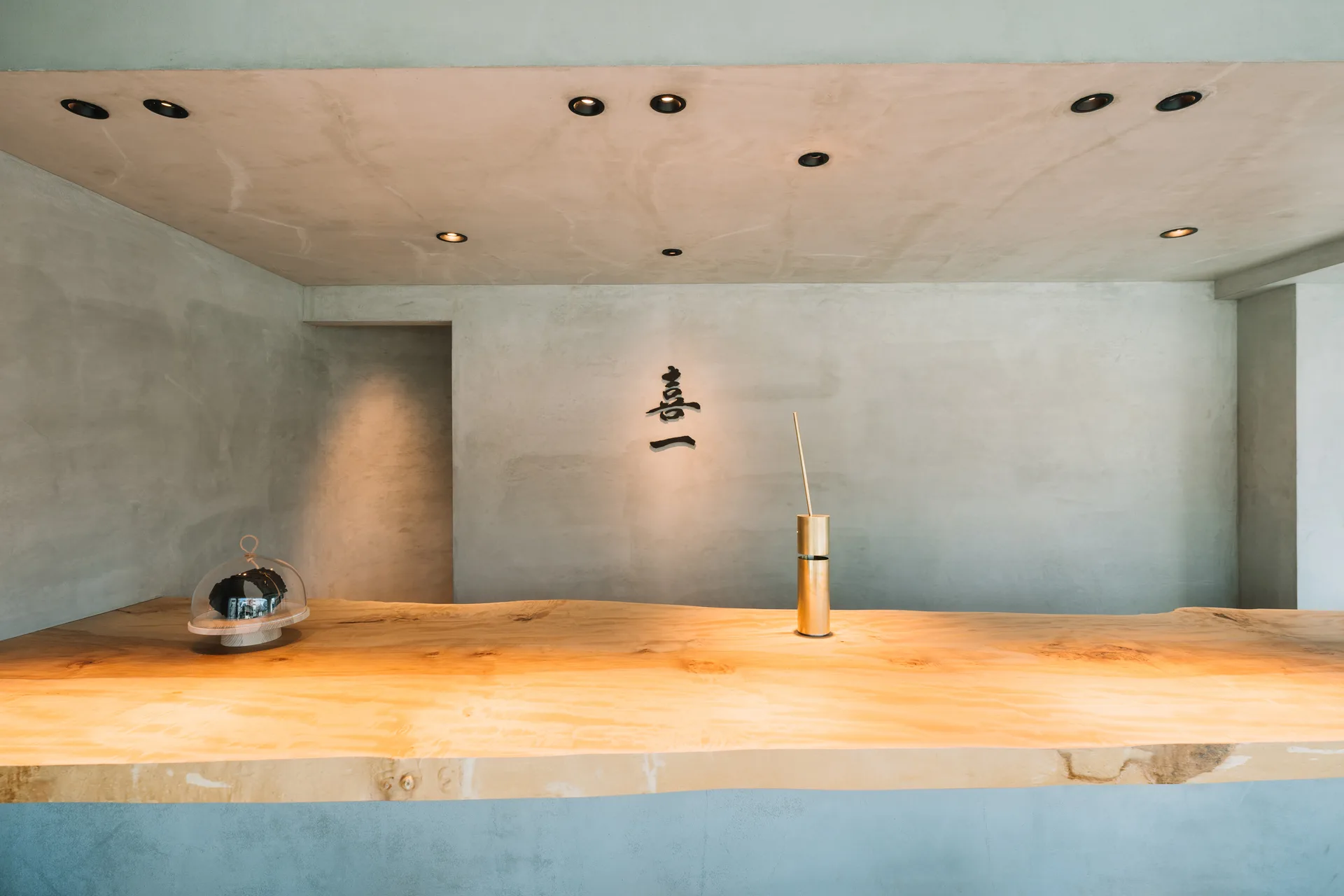
In 2026, Michelin awarded Kombu to Men Kiichi a Bib Gourmand, praising good-quality, good-value cooking. The space is intimate: just ten seats at a counter, with three seatings per day. It is a quiet, focused room where the history of the building and the depth of the broth speak more than any decoration.
Kiichi is Japanese cooking at its most elemental – not a reinvention, but a reclamation.
Recognition

Ambience
Details
Location

 Facebook
 Instagram
 X
X