
The story
Tenjaku began as a Kyoto restaurant run by the grandfather of Ryo Nishioka. Watching guests leave with satisfied smiles, young Nishioka decided at age three that he would one day take over. After graduating from Keio University, he joined the kitchen in 2014, then honed his craft at two-Michelin-starred Kōdai-ji Wakuden and Otagi when his grandfather’s health forced a temporary closure in 2017. In December 2021, Nishioka reopened Tenjaku in the same Nishijin location, restoring its former vibrancy with a renovated space and a focused vision.
As the name suggests, Tenjaku’s kaiseki courses always feature tempura — not as a platter, but fried piece by piece before each guest, much like a dedicated tempura shop. The meal begins with hassun, a vivid arrangement that captures Kyoto’s seasonal beauty visually and on the palate. Ingredients are sourced locally and from producers Nishioka personally selects nationwide; each element carries a story he shares with diners.
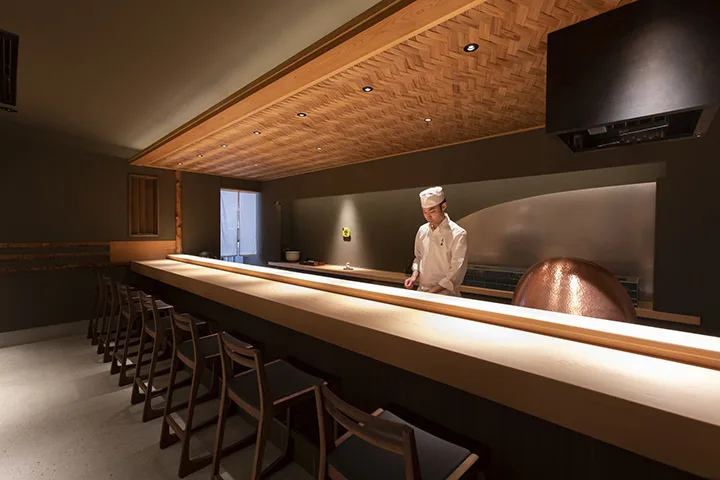
The eight-seat counter is a single slab of Bishū hinoki, said to be nearly a thousand years old and fourteen centimetres thick. It was inherited from the original Tenjaku and warms the room with its presence. Plates range from antique ceramics to contemporary works, including pieces Nishioka throws himself at Teizan Kiln and Rakuyaki Kiln Motoyoshiraku. The restaurant also offers natural wine and Chinese tea as alternatives to sake, and an English menu is available.
Tenjaku’s precise, personal approach earned a Michelin star in 2026, a natural reflection of Nishioka’s dedication. The restaurant welcomes families, couples, and colleagues — children are allowed with prior notice, and a private room is available for up to six guests. Tenjaku is a place where Japanese cuisine becomes a doorway to the country’s broader craft culture, from knives to hanging scrolls to the building itself.
Recognition

Details
Location

 Facebook
 Instagram