
The story
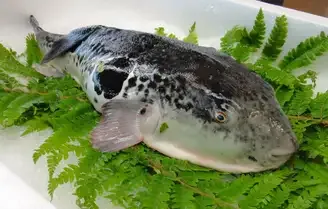
In Osaka’s Kitashinchi district, Yoshiko has spent more than a quarter century refining one of Japan’s most demanding cuisines: fugu. The restaurant works exclusively with premium wild white pufferfish, sourced by handline and longline from the Bungo Channel and waters off Yamaguchi, Ehime, Oita, Fukuoka and Nagasaki. Air-shipped daily, each catch then rests in near‑freezing conditions for a minimum of three days—a practice the chef insists upon to deepen flavour and texture. This insistence on time and provenance earned Yoshiko its first Michelin star, a quiet acknowledgement of the rigour behind every course.
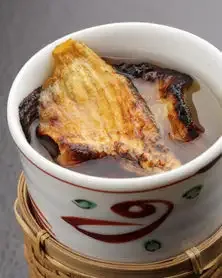
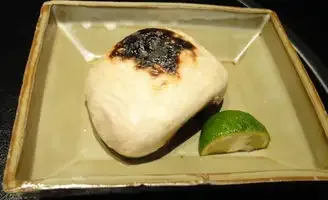
The signature dish was invented by the second‑generation owner over two decades ago: thick slices of the fish’s upper body are lightly seared on a hot stone, then dipped into a delicate ponzu as a kind of “grilled shabu‑shabu”. The technique is deceptively simple, but the result—a contrast of charred surface and silken, yielding flesh—has made it a house favourite for more than 25 years.
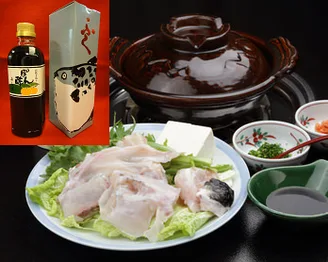
No vinegar, no katsuobushi. Yoshiko’s ponzu is made from hand‑squeezed sudachi (arriving in September from a selected orchard in Tokushima) and green oranges (from a contract farmer in Yamaguchi, harvested in October). The juices are aged for roughly 50 days to round their acidity, then blended with first‑grade kombu from Hakodate and soy sauce from Takasago. This pure citrus base is bottled in limited quantities from 20 November each year—a rare souvenir.
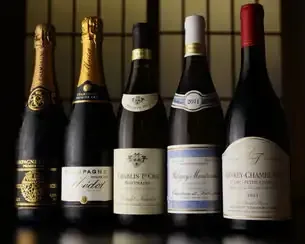
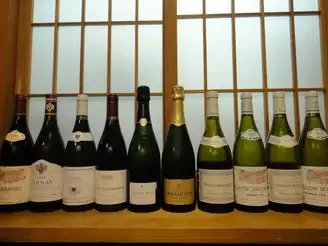
Fugu houses with a wine cellar are uncommon. Yoshiko’s proprietress holds sommelier and sake/shōchū tasting qualifications, and she guides guests through pairings that suit fugu raw, grilled, fried or simmered. Whether a Champagne, a white Burgundy, or a local junmai, the match is chosen to lift the fish’s subtle sweetness without overwhelming it.
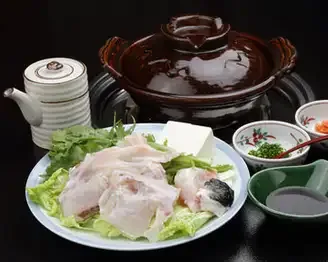
Every day at 13:30, the chef begins portioning the day’s reservations. The head bones, gill bones, collar and tail—parts that are fiddly to eat but rich in gelatine—are carefully trimmed and simmered to produce a concentrated broth for the techiri hot pot. Only enough broth is made for the evening’s booked guests, which is why same‑day reservations are accepted only until 13:00. This meticulous, pared‑down approach runs through the entire meal: the kitchen contributed to the latest professional fugu cooking manual published by Shibata Shoten, confirming its place as a reference point in the craft.
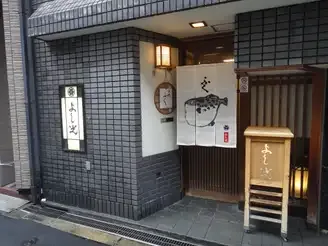
Yoshiko seats 23, with private rooms for two to twelve. It operates from 18:00 to 22:00 (last order 21:00), closed on Sundays. English menus and English‑speaking staff are available. Advance booking by five days to a week is essential—the aging and dashi preparation depend on it.
Recognition

Ambience

Details
Location