The story
In a quiet corner of Harajuku, chef Yuki Noda runs a small restaurant that is equal parts research lab and dining room. His project is deceptively simple: to explore the regional cooking of Japan, from Hokkaido to Okinawa, and to present it through the lens of a chef who trained in both French gastronomy and traditional Japanese kitchens.
The concept is laid out plainly on the restaurant’s website: “Seasonal cuisine of the Japanese archipelago. Regional dishes from Hokkaido to Okinawa, with seasonal ingredients.” What that means in practice is a constantly evolving menu built on the kind of deep, personal research that takes Noda to remote islands and family kitchens. His dishes are not reproductions but interpretations—rooted in tradition but rethought with the precision of a chef who spent years in Paris, including a stint at the three-Michelin-starred Taillevent.
Noda’s cooking is contemporary and seasonal, and it has earned a place in the Michelin guide. The recognition feels earned: this is a kitchen that treats each ingredient with the kind of attention that comes from knowing where it comes from and who grew it.
The chef’s path to this point is unusually varied. Born in Shizuoka in 1983, he trained in France from bistro to haute cuisine, then returned to Tokyo to open the French-inspired kiki harajuku in 2011. He later closed that restaurant to train at a traditional Japanese establishment before opening Noda in 2023. Along the way, he developed a philosophy influenced by dub music—the idea of adding new value without destroying the original. That approach is visible in every dish.
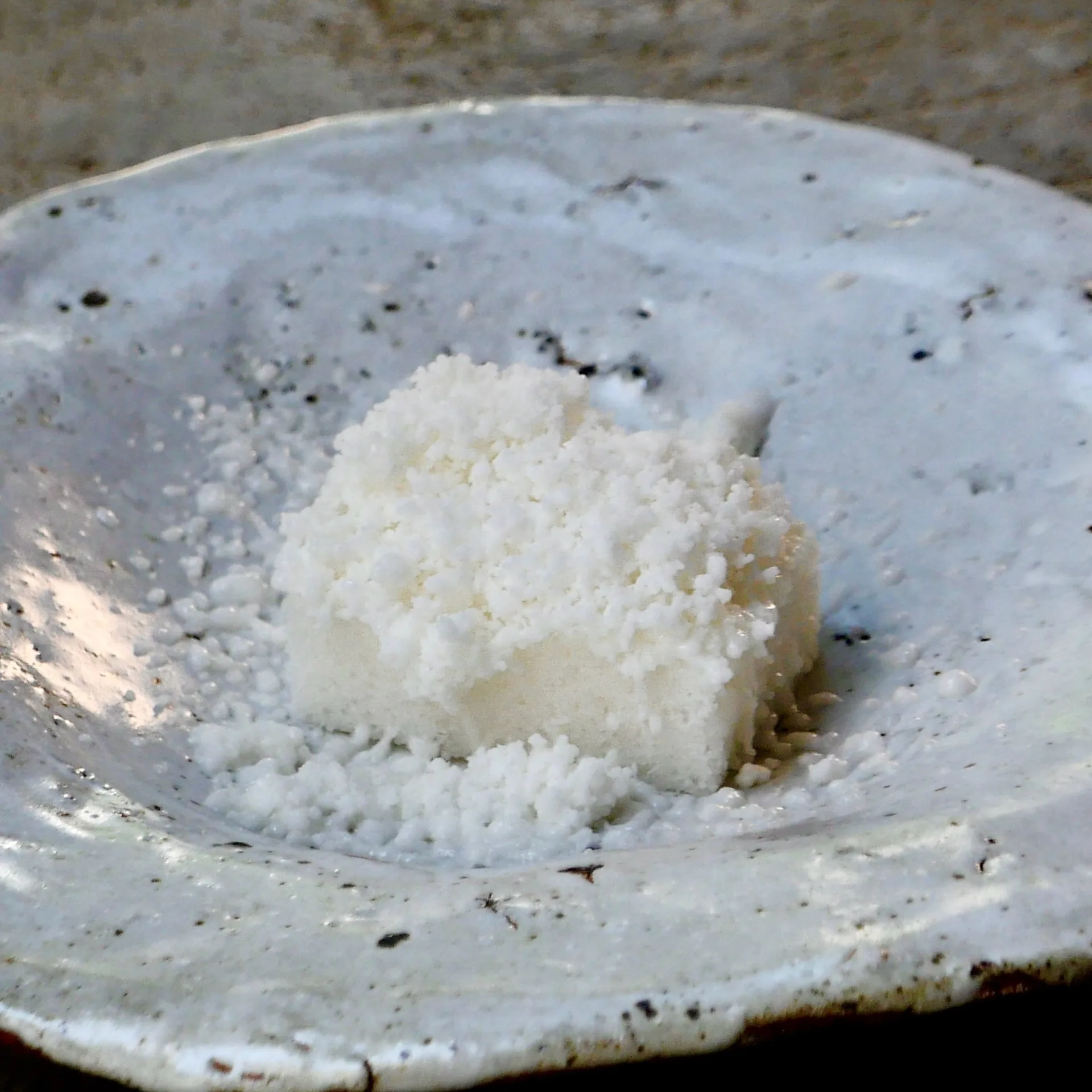
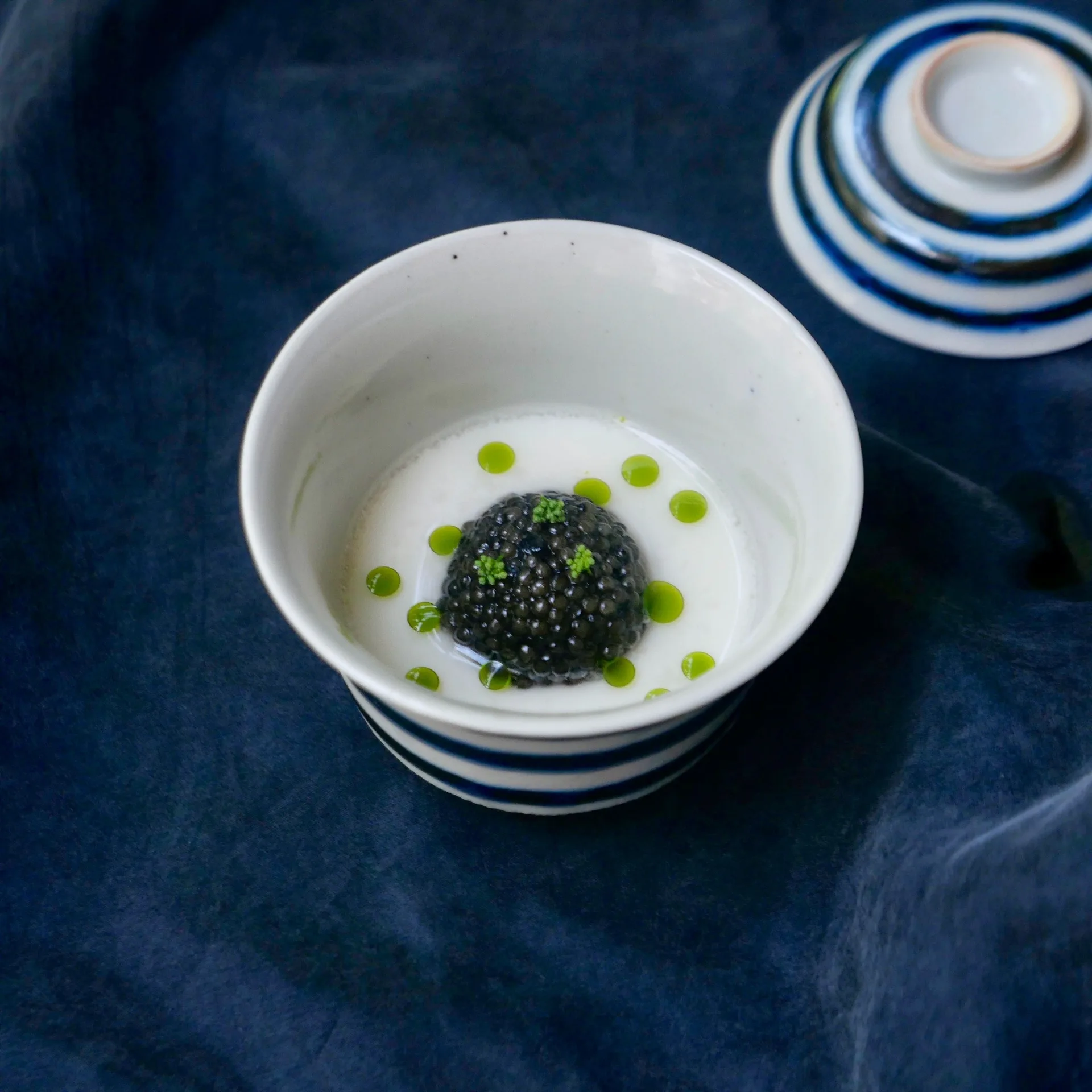
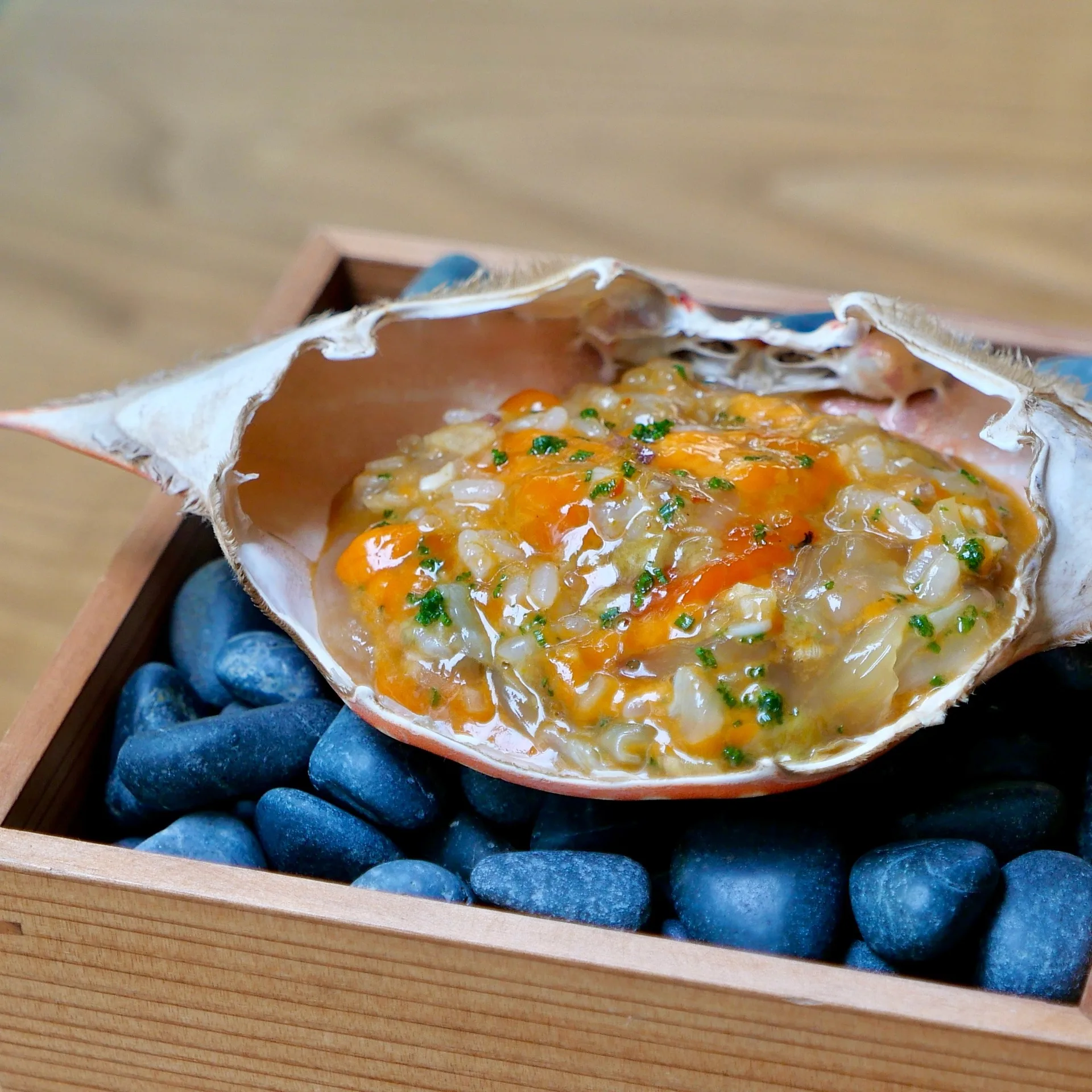
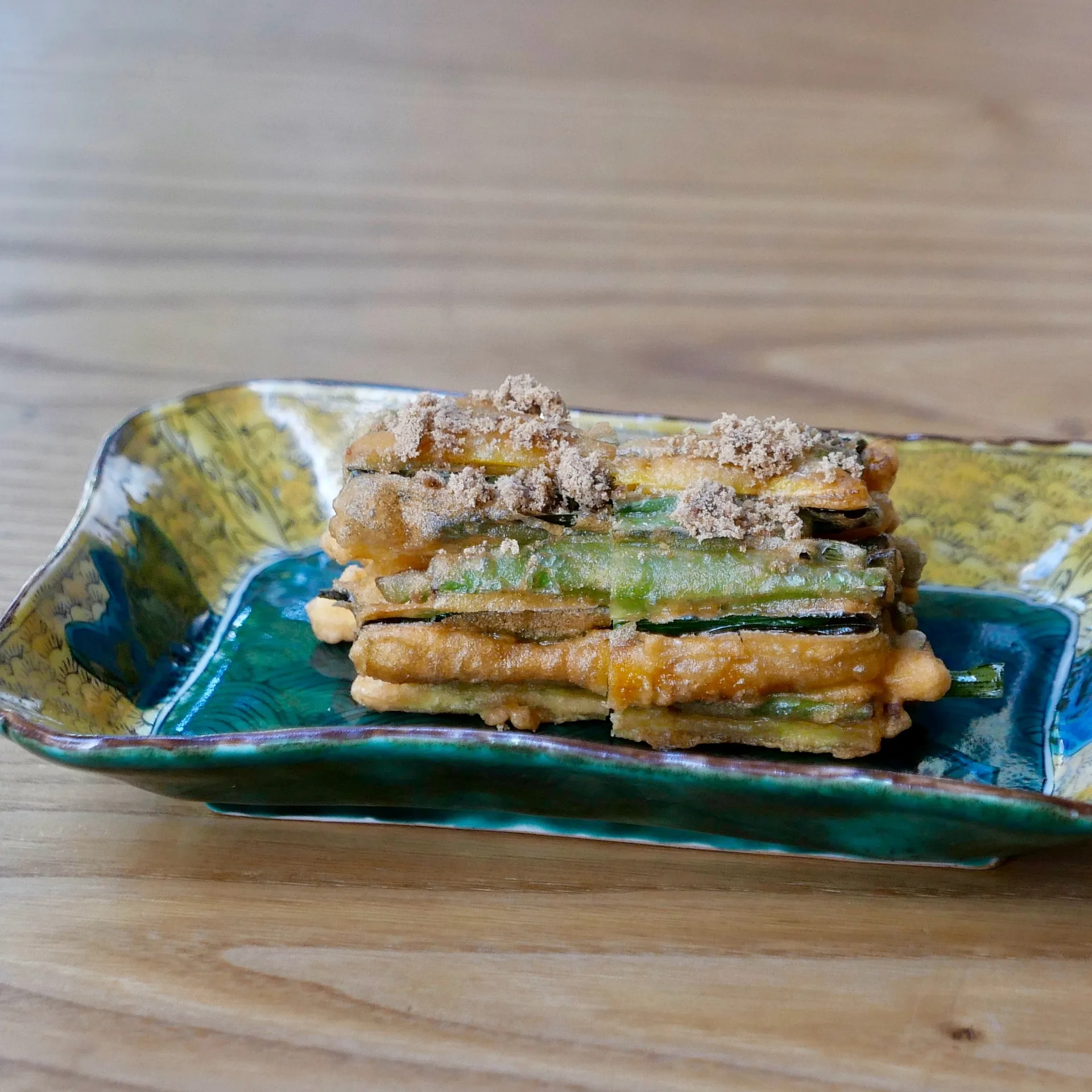
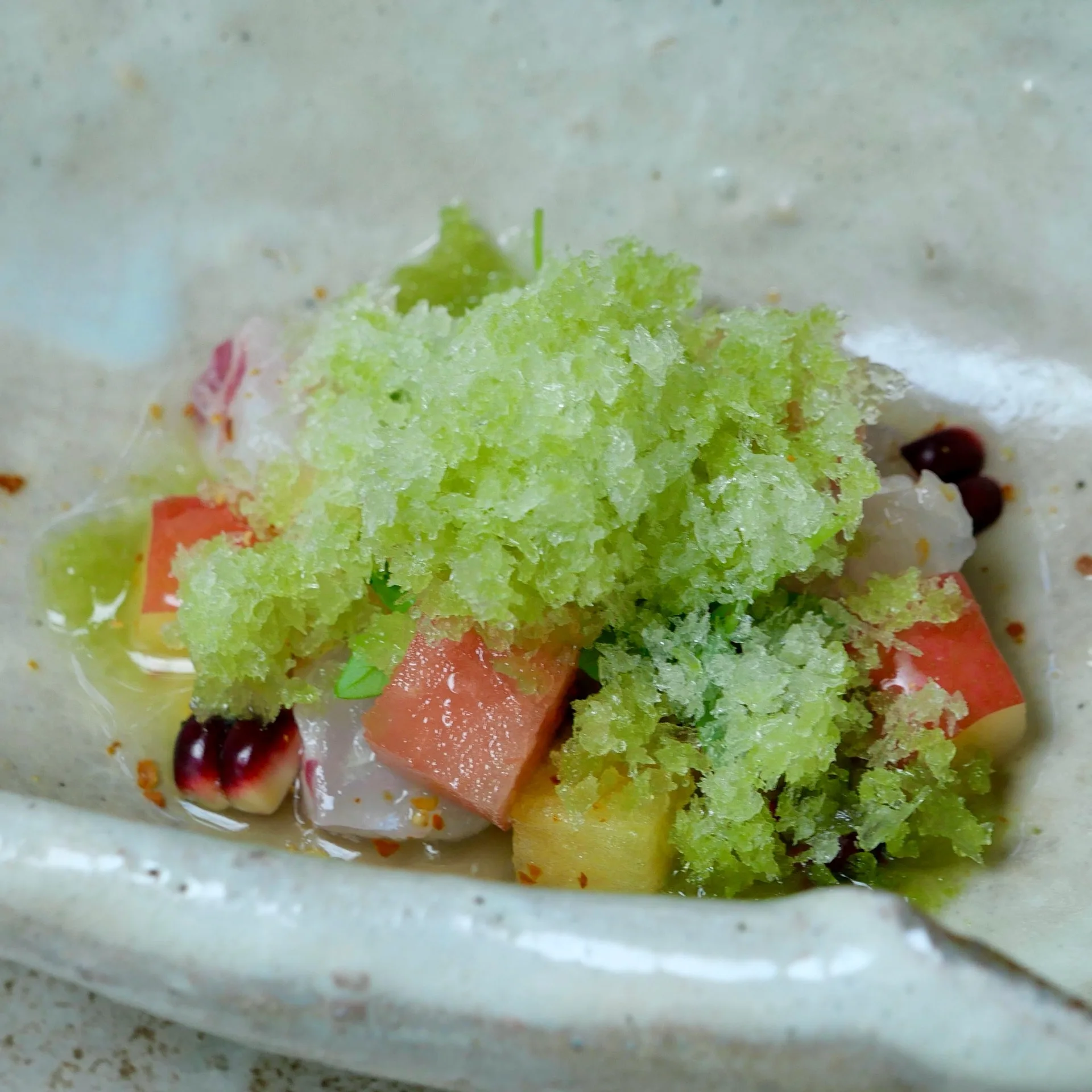
A recent menu included pīmaka, a ceviche-like dish from Chichijima, one of the Ogasawara Islands. Noda learned it from a direct descendant of the island’s first settlers, who made it for him just before he boarded the ferry home. His version uses morning-caught isaki fish with local chili, watermelon, plum, passion fruit, and a shaved ice of cinnamon basil. Another dish, saba no nukamiso-daki, simmers mackerel in the chef’s own family’s nukadoko—the fermented rice bran bed that has been passed down from his grandmother to his mother to him. He pairs it with seasonal artichokes.
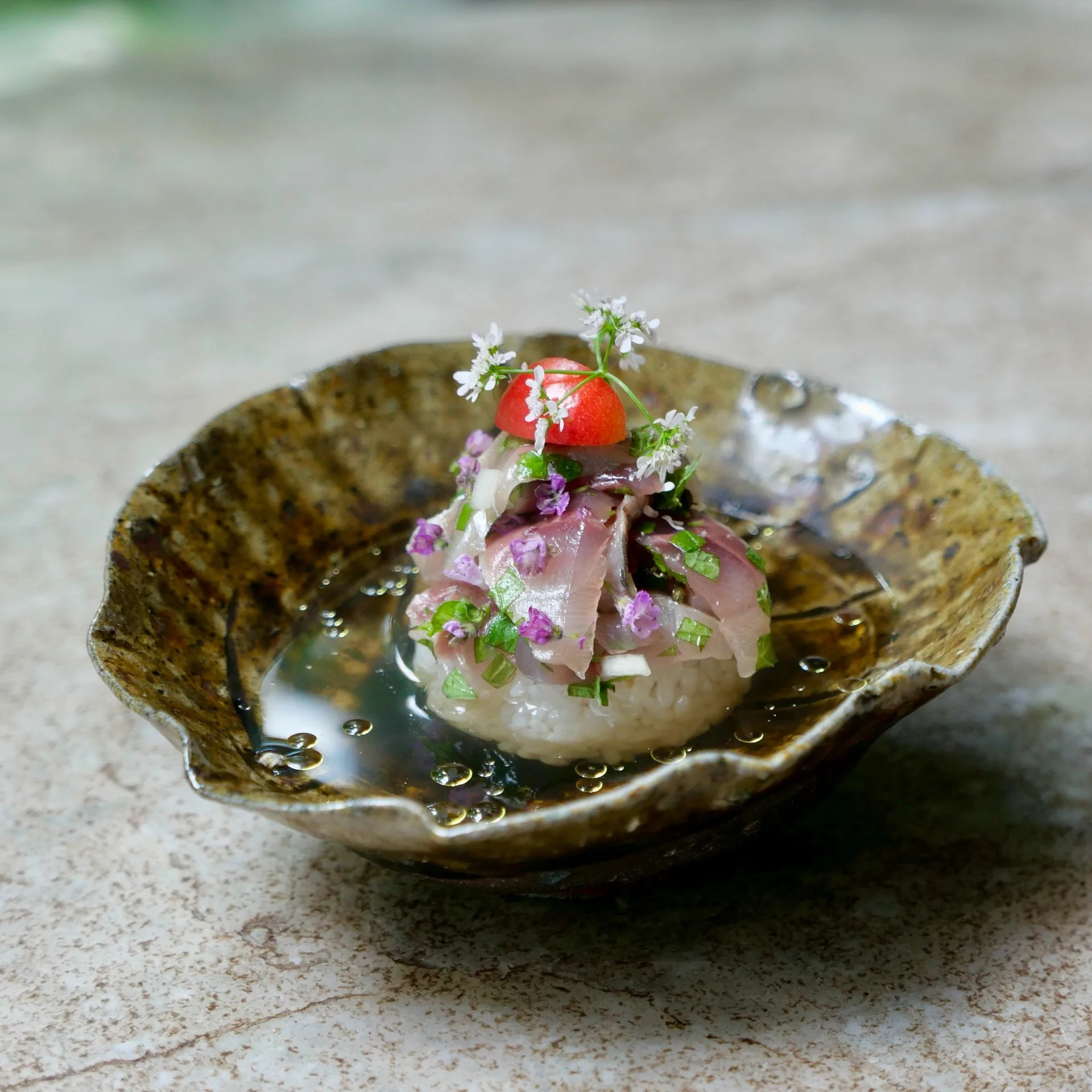
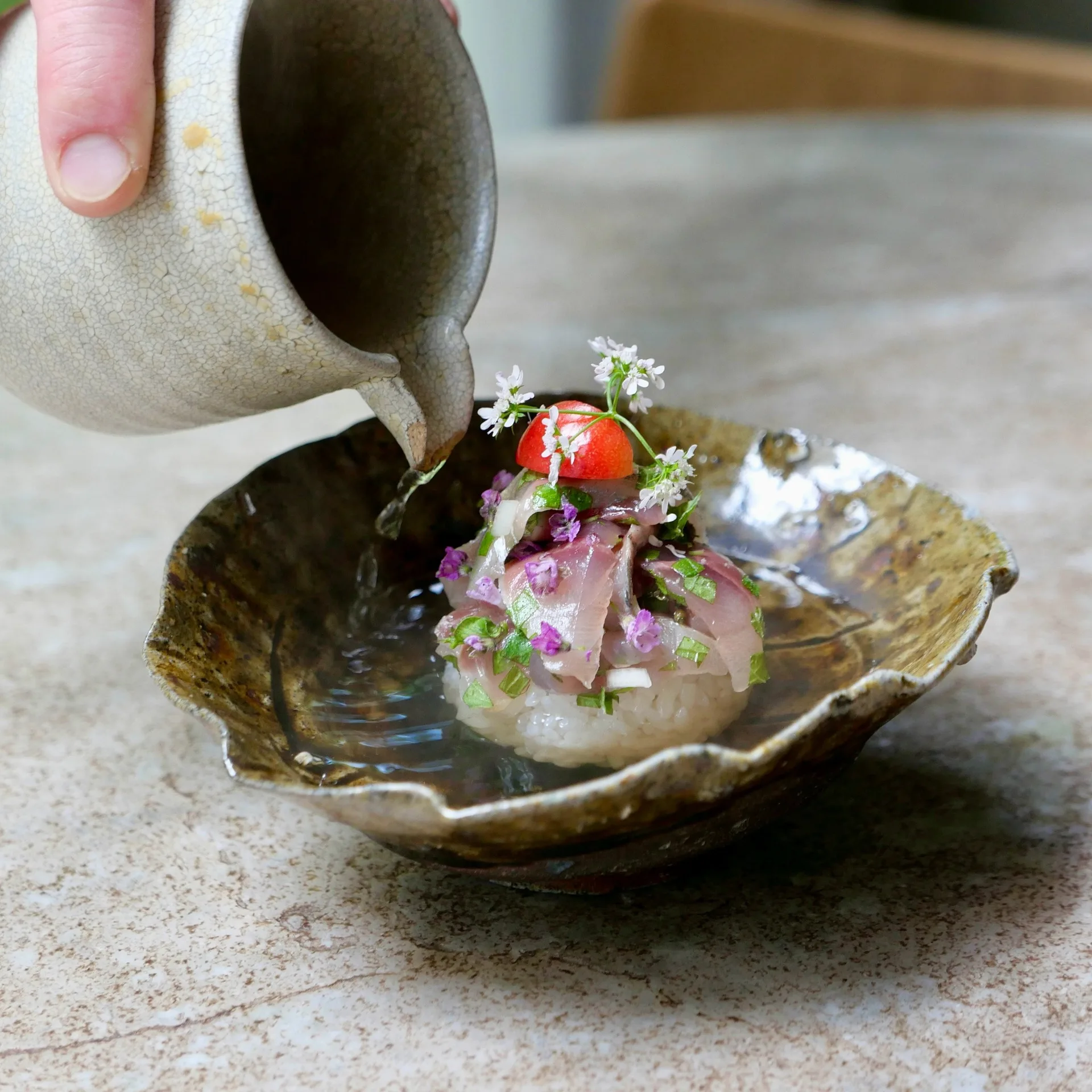
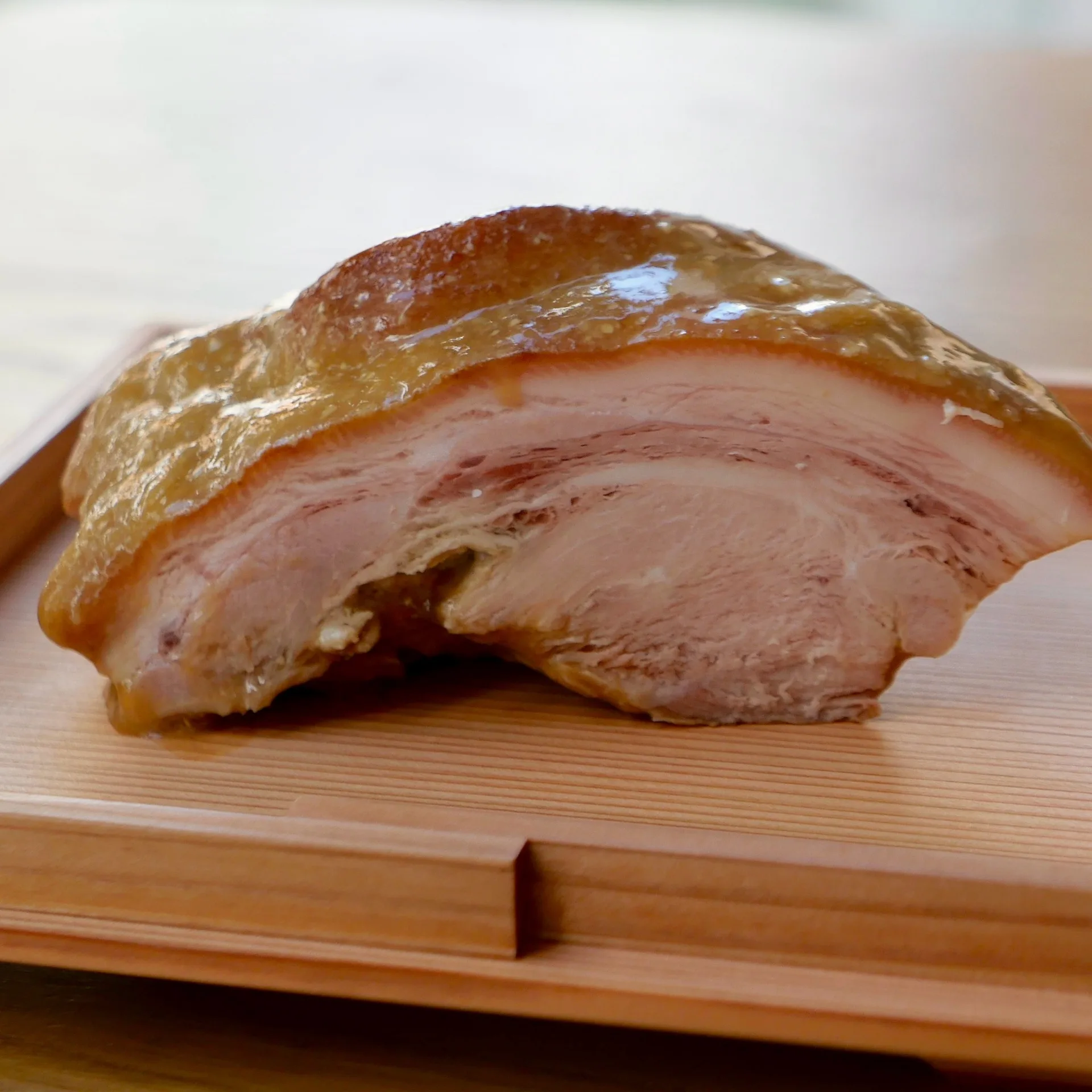
Other offerings have included tonkotsu, a Kagoshima braised pork dish with a 300-year history, here made with skin-on suckling pig, sweet barley miso, and sweet potato shochu; and mago chazuke, a fisherman’s rice bowl from the Izu Peninsula, served here with fatty horse mackerel, coriander, shiso, cherry, and a broth made from house-made pickled plums.
The restaurant is small, with counter seating, and serves both lunch and dinner. The atmosphere is quiet and focused—this is not a place for spectacle, but for eating that rewards attention. Noda travels constantly, studying regional food culture and digging into old Japanese music. His cooking reflects that curiosity: it is informed, personal, and never static.
Recognition


Ambience
Details
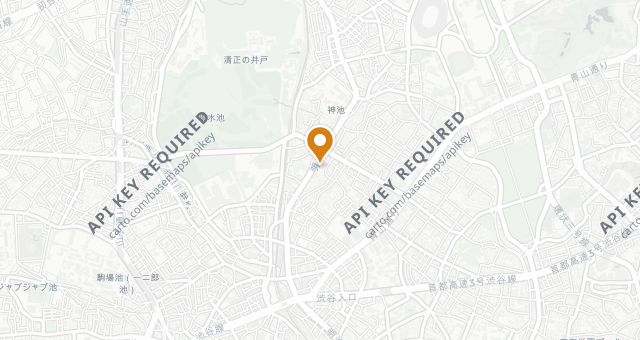
Location